
Your body speaks to you every single day. When you feel tired without reason, moody without cause, or bloated without explanation, your hormones are asking for attention. The wonderful truth is that the right foods for hormonal balance can gently bring your body back to a steady place. No complicated routines, no confusing supplements. Just real food working with your body the way nature always intended.
Why your Hormones Go Off Track
- Hormones are chemical messengers that travel through your blood and tell every organ what to do and when. Your sleep, appetite, mood, weight, and skin all depend on hormonal signals working properly. When even one hormone shifts out of range, it creates a ripple effect across the whole system.
- Modern life makes this harder. Late nights, skipped meals, processed snacks, constant stress, and even the plastics we use daily all interfere with how hormones are made and used. For women, hormonal shifts happen throughout every life stage. Teenage years, reproductive years, pregnancy, and perimenopause each bring their own changes. Through every phase, food plays a direct and powerful role in how smoothly your body handles it all.
- The encouraging thing is that many of the best foods for hormonal balance are already part of everyday Tamil Nadu cooking. Traditional South Indian eating aligns deeply with what modern nutritional science recommends. Let us go through each one clearly.
Flaxseeds: The Tiny Seed that Rebalances Estrogen
- Flaxseeds sit at the top of any honest list of foods for hormonal balance. These small seeds contain plant compounds called lignans, a type of phytoestrogen that interacts with estrogen receptors in a gentle and intelligent way.
- When estrogen is too high, lignans bind to receptors and reduce excess activity. When estrogen is low, as during menopause, they provide a mild estrogenic effect that fills the gap. This two-way action makes flaxseeds uniquely valuable.
- Research shows that women who consume ground flaxseeds regularly experience improved estrogen metabolism. Their bodies process used estrogen more efficiently and clear it through digestion rather than allowing it to recirculate in the blood. Flaxseeds are also rich in omega-3 fatty acids and soluble fiber, both of which support gut bacteria and reduce the inflammation that drives hormonal disruption.
- Always grind flaxseeds before eating. Whole seeds pass through digestion unbroken, so your body cannot access the lignans. One tablespoon of freshly ground flaxseed stirred into curd or porridge every morning is a simple and effective daily habit.
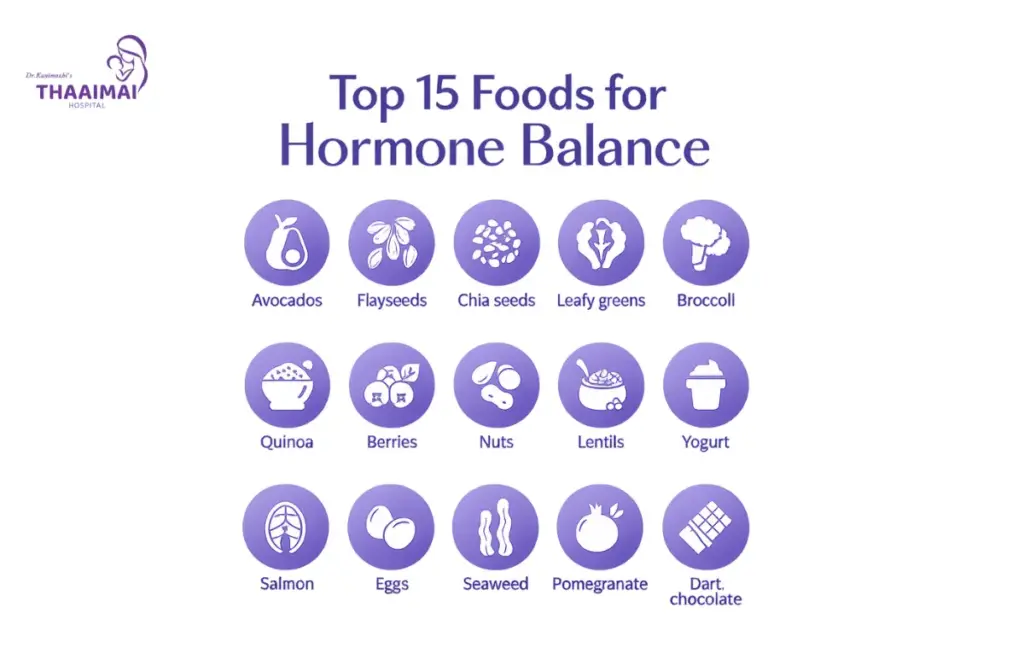
Sesame Seeds: Traditional Wisdom the Science Now Confirms
- Ellu has been part of Tamil cooking for generations, and what tradition always knew intuitively, nutrition science now confirms. Sesame seeds are among the most effective foods for hormonal balance available.
- They contain their own form of lignans called sesamin and sesamolin, which specifically help improve progesterone levels. Progesterone is the calming hormone that supports restful sleep, regulates menstrual cycles, and keeps anxiety in check. Many women dealing with sleep problems, PMS, or irregular periods are unknowingly low in this hormone.
- Beyond lignans, sesame seeds deliver zinc, magnesium, and calcium. Zinc is directly involved in progesterone production and essential for thyroid hormone conversion. Magnesium is one of the most critical minerals for managing cortisol, the stress hormone that disrupts everything else when it stays elevated too long.
- A handful of roasted sesame seeds as a snack, or a generous pour of gingelly oil over rice, gives your body a quiet and consistent hormonal advantage every single day without any complicated preparation.
Leafy Greens: your Liver needs these Daily
- The liver is one of the most important organs for hormonal health and rarely gets the credit it deserves. Every hormone your body produces eventually needs to be broken down and cleared by the liver once it has finished its job. If the liver lacks the right nutrients, old hormones like estrogen and cortisol build up in your system instead of being eliminated. This buildup is a very common and overlooked cause of hormonal imbalance.
- Leafy greens are among the most powerful foods for hormonal balance because of how strongly they support liver detoxification. Murungai keerai, vendhaya keerai, spinach, and amaranth are all rich in compounds called glucosinolates and indole-3-carbinol that activate the liver’s natural clearing pathways.
- They also contain folate, which supports methylation, a body process that directly controls how estrogen is processed and removed. Low folate means poor estrogen clearance, which means hormonal buildup.
- Drumstick leaves deserve special mention. They are rich in iron, calcium, and vitamin C and have been used traditionally to support women’s health for generations. Adding a generous amount of keerai to at least one meal each day, whether in kootu, poriyal, or sambar, is one of the most effective hormonal health habits you can follow.
Fatty Fish: Cooling the Stress Hormone that Disrupts Everything
- Cortisol, the stress hormone, has the power to create chaos across your entire hormonal system when it stays high for too long. Elevated cortisol suppresses thyroid function, reduces progesterone, raises blood sugar, promotes belly fat, and destroys quality sleep. Managing cortisol is therefore one of the most important parts of overall hormonal health.
- Fatty fish like mackerel, sardines, and anchovies are exceptional foods for hormonal balance because of their high omega-3 content. Omega-3 fatty acids reduce the production of inflammatory molecules that trigger excess cortisol release. Many scientific studies have found that omega-3 intake is linked to reduced cortisol levels during chronic stress.
- Coastal Tamil Nadu families who regularly eat nethili or sardines a few times a week are getting a natural cortisol-managing advantage without even thinking about it. These smaller fish are also lower in mercury than larger species, making them safer for regular consumption. For vegetarians, walnuts and chia seeds offer plant-based omega-3s, though fatty fish delivers the most easily absorbed form.
Turmeric: The Kitchen Spice that Protects Hormones at a Cellular Level
- There is almost no dish in Tamil Nadu cooking that skips turmeric, and from a hormonal perspective this is a tremendous advantage. Curcumin, the active compound in turmeric, works through two clear pathways.
- The first is inflammation reduction. Chronic low-grade inflammation is one of the most common hidden triggers of hormonal disruption. When your immune system stays active at a low level constantly, hormone receptor sensitivity decreases. Your cells lose the ability to hear hormonal signals properly. Curcumin is one of the most studied natural anti-inflammatory compounds available.
- The second pathway involves an enzyme called aromatase, which converts androgens into estrogen. Curcumin has been shown to reduce aromatase activity. In conditions like PCOS where excess estrogen and high androgens are both problematic, this effect helps bring hormone levels back toward a healthier ratio.
- Adding black pepper to turmeric, as is natural in most Tamil recipes, increases curcumin absorption dramatically. Piperine in black pepper slows curcumin breakdown in digestion. That pinch of pepper your mother always added was doing more than seasoning.
Fermented Foods: Building the Gut Bacteria that Manage Estrogen
- Moru, idli, dosa, and koozh are not just comfort foods. They are among the most important foods for hormonal balance, and the reason lies in a fascinating connection between your gut and your hormones.
- Inside your gut lives a group of bacteria called the estrobolome. These bacteria produce an enzyme that plays a direct role in how your body processes and eliminates estrogen. When gut bacteria are healthy and diverse, they help clear used estrogen efficiently through digestion. When gut bacteria are imbalanced, estrogen that was supposed to be eliminated gets reactivated and reabsorbed into your bloodstream.
- This reabsorption drives estrogen dominance, which is linked to heavy periods, fibroids, breast tenderness, and mood swings. Fermented foods restore and maintain gut balance, preventing this cycle.
- They also support serotonin production, which is particularly important because ninety percent of your body’s serotonin is produced in the gut. Serotonin affects mood, appetite, and sleep quality, all of which are hormone-dependent functions. A glass of fresh moru after lunch is one of the most affordable and effective hormonal health habits you can adopt.
Sweet Potatoes: Stabilizing the Hormone that Affects All Others
- Insulin is a hormone most people associate only with diabetes, but it influences every other hormone in your body. When you eat foods that spike blood sugar quickly, a large burst of insulin follows. If this pattern repeats throughout the day, cells become resistant to insulin signals. In women, this raises androgen levels, suppresses progesterone, and disrupts thyroid function.
- Sweet potatoes, known as sakkaravalli kizhangu, are excellent foods for hormonal balance because they release natural sugars slowly into the bloodstream. Their high fiber content slows digestion and prevents the sharp insulin spikes that create hormonal chaos.
- They are a good source of beta carotene that the body changes into vitamin A. Vitamin A is needed for progesterone production and for thyroid hormone receptors to function properly. Without enough vitamin A, thyroid hormones cannot do their job even if levels appear normal on a test. Boiling or steaming sweet potatoes keeps their glycemic impact low while preserving all their beneficial nutrients.
Conclusion
Your hormones are not working against you. They are constantly trying to find balance, and every meal either helps or hinders that effort. Flaxseeds, sesame seeds, leafy greens, fatty fish, turmeric, fermented foods, and sweet potatoes are not difficult to find or prepare. Most of them have always been on the South Indian table. Making them a consistent and intentional part of your daily eating is one of the most genuine things you can do for your long term hormonal health.