
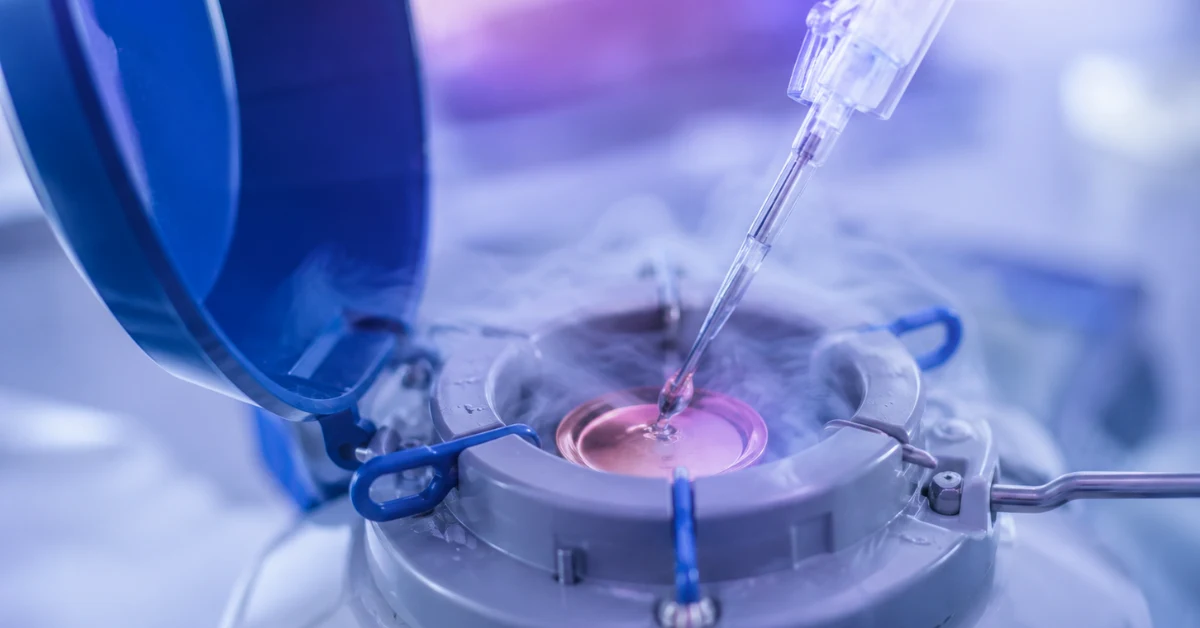
Many women today want to take control of their reproductive future — and egg freezing makes that possible. At THAAIMAI Hospital, we offer egg freezing treatments in Chennai that are safe, medically proven, and designed with your long-term wellbeing in mind.
Egg freezing, or oocyte cryopreservation, is the process of collecting a woman’s eggs, freezing them at a very low temperature, and storing them until she is ready to use them. The eggs stay in a preserved state without any biological change. When the time comes, they are thawed and used to achieve a pregnancy.
This is not a new or experimental treatment. Egg freezing has been used successfully for over a decade, and thousands of healthy babies have been born worldwide through this method.
Oocyte cryopreservation simply means "freezing of eggs." The word "oocyte" refers to a mature egg cell in a woman's body. When these eggs are collected and stored using a special freezing method, their quality is maintained for years.
The modern technique used today is called vitrification — a flash-freezing process that protects the egg from damage. Unlike older slow-freezing methods, vitrification gives much better results and is the standard used at THAAIMAI Hospital.
The key point to understand is this: your eggs freeze in time. If you freeze them at 30, they remain biologically "30-year-old eggs" even if you use them at 38. This is what makes egg freezing such a powerful option for women who want to plan ahead.
A woman is born with all the eggs she will ever have. As she gets older, the number and quality of those eggs naturally decline — this process begins even in a woman's late 20s and becomes more noticeable after 35.
Egg freezing allows you to preserve healthy, good-quality eggs at a younger age and use them later when you are ready. This is particularly helpful for women who are not in a position to start a family right now but want to keep that option open.
At THAAIMAI Hospital, our egg freezing treatments in Chennai are carried out with a clear focus on preserving both your egg quality and your overall health throughout the process.
Egg freezing is not only for one type of woman. It is a thoughtful choice made by women from many different life situations. Here is a look at who can benefit the most:
Women Delaying Pregnancy
If you are in your late 20s or early 30s and you know that starting a family is still a few years away, this is actually the best time to consider egg freezing. Your eggs are at their healthiest right now.
Women who freeze eggs in their late 20s or early 30s tend to have better outcomes when they return to use them later. Waiting until you feel the pressure of time is not always necessary — planning early gives you the most options.
Career and Personal Planning
Life does not always follow a fixed timeline. Many women are focused on building a career, completing a degree, or simply not yet in the right relationship or life stage to have a child. That is a perfectly valid reason to consider egg freezing.
It allows you to make career and personal decisions without feeling like your biological clock is the only factor in play. You get to decide when the time is right — on your own terms.
Cancer Patients Before Chemotherapy
This is one of the most important medical reasons for egg freezing. Chemotherapy and radiation treatments used for cancer can damage the ovaries and permanently affect a woman's ability to conceive.
For women diagnosed with cancer who have not yet had children, freezing eggs before starting cancer treatment is a critical step that can protect their future fertility. At THAAIMAI Hospital, we work quickly and sensitively to support women in this situation so they can begin cancer treatment without delay.
Women with Low Ovarian Reserve
Some women have fewer eggs than expected for their age — a condition known as low ovarian reserve. This can be identified through a simple blood test and ultrasound. If this applies to you, freezing your eggs sooner rather than later is highly recommended.
Waiting in this case may mean fewer eggs available in the future. Acting now gives you the best chance of collecting a good number of healthy eggs while they are still available.
Family History of Early Menopause
If your mother or grandmother went through menopause early — before the age of 45 — you may be at a higher risk of experiencing the same. Early menopause significantly reduces the time available to conceive naturally.
If there is a family history of this, speaking to a fertility specialist at THAAIMAI Hospital and considering egg freezing early can give you important security for your future family plans.
Fertility Preservation Before Surgery
Certain gynaecological surgeries — such as those for endometriosis, ovarian cysts, or fibroids — can reduce ovarian reserve or affect egg production. If you are scheduled for such a procedure, your doctor may recommend freezing eggs beforehand as a precaution.
This ensures that even if surgery affects your ovarian function, you still have healthy eggs stored and available for the future.
The benefits of egg freezing go beyond just the medical. It touches your emotional wellbeing, your confidence, and your sense of control over your own life.
Preserve Fertility at a Younger Age
The most straightforward benefit is biological. Freezing your eggs when you are younger means preserving higher quality eggs. Egg quality naturally declines with age, and this decline cannot be reversed. But frozen eggs remain in the same condition they were in when they were collected.
This is why egg freezing treatments in Chennai at THAAIMAI Hospital focus on helping women act at the right time — not too late.
Better Reproductive Planning
Egg freezing gives you the freedom to plan your reproductive life in a way that fits your real situation. You do not have to rush into pregnancy or a relationship just because of age-related concerns.
Emotional Peace of Mind
This is something many women speak about after freezing their eggs — a genuine sense of relief. Knowing that your healthy eggs are safely stored gives you emotional space. You are not constantly worried about running out of time.
This peace of mind is real, and it matters. THAAIMAI Hospital understands that fertility decisions are never just medical — they are deeply personal, and we are here to support that journey fully.
Improved Pregnancy Opportunities in the Future
When you are ready to use your frozen eggs, the chances of a successful pregnancy are linked to the age at which the eggs were frozen — not your current age. This means a woman who froze eggs at 30 and uses them at 38 has better odds than someone who did not freeze and tries naturally at 38.
This does not mean success is guaranteed, but it significantly improves the possibilities available to you.
Understanding what actually happens during the process can make it feel much less overwhelming. The process involves several clear, well-managed steps — and at THAAIMAI Hospital, you are guided through each one carefully.
Initial Fertility Evaluation
Before anything begins, you will have a complete fertility assessment. This includes:
This evaluation helps your fertility specialist understand your ovarian reserve and plan the right protocol for you. Every woman's body is different, and your treatment plan will be tailored accordingly.
Ovarian Stimulation
Once your evaluation is done and your plan is ready, you will begin a course of hormone injections for around 10 to 14 days. These injections stimulate your ovaries to produce multiple eggs in one cycle instead of the one egg normally released.
These medications are self-administered — your care team at THAAIMAI Hospital will show you exactly how to do this at home. The process is manageable, and most women find it much easier than they expected.
Monitoring Egg Development
During the stimulation phase, you will come in for regular monitoring appointments — typically every 2 to 3 days. These include blood tests and ultrasound scans to track how your follicles are growing.
This monitoring ensures your ovaries are responding well and allows the team to adjust your medication if needed. The timing of the next step — egg retrieval — is decided based on when the follicles reach the right size.
Egg Retrieval Procedure
Egg retrieval is a minor procedure done under sedation, so you will not feel any discomfort during it. A thin needle is guided through the vaginal wall using ultrasound to gently collect the fluid from each follicle — along with the egg inside.
The procedure typically takes about 20 to 30 minutes. You will rest for a short while afterward before going home the same day. Most women feel well enough to resume light activity within a day or two.
Vitrification and Freezing Process
After collection, the eggs are immediately assessed in the laboratory. Mature eggs are selected for freezing. The vitrification process involves treating the eggs with a special solution and then cooling them at an extremely fast speed — so fast that ice crystals cannot form and damage the egg.
This is one of the most critical steps, and THAAIMAI Hospital uses advanced cryopreservation equipment and techniques to ensure the best possible egg survival rates.
Safe Storage of Frozen Eggs
Once frozen, your eggs are stored in secure, temperature-controlled cryogenic tanks. These tanks are maintained at -196°C using liquid nitrogen. The storage system is monitored continuously to ensure safety and consistency.
Your eggs remain in this protected state until you decide to use them — whether that is one year or ten years from now.
One of the most common questions women ask is: how long can the eggs actually stay frozen? The reassuring answer is — for a very long time.
Egg Storage Duration
Research and clinical evidence show that eggs can be stored for many years without any loss in quality. There is no scientific upper limit that has been firmly established — studies have shown successful pregnancies from eggs stored for over a decade.
In India, eggs are typically stored for up to 10 years, with extensions available depending on individual circumstances and regulatory guidelines. Your fertility specialist will discuss the storage terms with you clearly at the beginning.
Safety and Quality Maintenance
The vitrification process, when done correctly, essentially "pauses" the biological activity of the egg. There is no deterioration over time in properly stored eggs. The same quality that existed when the egg was frozen is what you get when it is thawed.
This is why getting the freezing process right from the start — at a centre with strong laboratory standards like THAAIMAI Hospital — makes such a significant difference to future outcomes.
When you are ready to use your stored eggs, the process begins with a carefully managed thawing and fertilisation protocol.
Egg Thawing Process
When the time comes, your fertility specialist will coordinate the thawing of your eggs. The eggs are gradually warmed from their frozen state, and a solution is used to remove the cryoprotectant chemicals that were added before freezing.
Not all eggs will survive the thawing process — this is expected and factored into the planning. On average, 80 to 90 percent of vitrified eggs survive thawing when the freezing is done well.
Fertilisation with IVF/ICSI
Thawed eggs are then fertilised using a process called ICSI — Intracytoplasmic Sperm Injection. A single sperm is injected directly into each egg. This is the standard method used with frozen eggs because it gives the best fertilisation results.
The fertilised eggs are then cultured in the laboratory for 3 to 5 days, during which they develop into embryos.
Embryo Transfer Procedure
Once good quality embryos have developed, one or two are transferred into the uterus. This is a simple procedure, similar to a smear test, and does not require any sedation. Any additional good quality embryos may be frozen again as embryos for future use.
After the transfer, a pregnancy test is done about two weeks later to confirm the result.
Success rates in egg freezing depend on several factors, and it is important to have an honest understanding of what to expect.
Importance of Age in Egg Freezing
Age is the single most important factor in egg freezing success. Eggs frozen before the age of 35 have a significantly higher chance of leading to a successful pregnancy compared to eggs frozen after 37 or 38.
This is not meant to create pressure — it is simply to help women make informed decisions. The earlier egg freezing is considered, the more options and the better outcomes tend to be.
Factors Affecting Success Rates
Several other factors influence how successful egg freezing will be for a particular woman:
At THAAIMAIHospital, we are transparent with every patient about what their specific evaluation shows and what outcomes are realistic for their situation.
Like any medical procedure, egg freezing does come with some side effects and small risks. Being well informed helps you make a confident decision.
Hormonal Medication Side Effects
The hormone injections used during ovarian stimulation can cause some temporary side effects:
These side effects are common and generally mild. They resolve once the stimulation phase is complete.
A small number of women may develop a condition called ovarian hyperstimulation syndrome (OHSS), where the ovaries respond too strongly to the medication. At THAAIMAI Hospital, close monitoring during stimulation is one of the key ways we reduce this risk significantly.
Egg Retrieval Risks
The egg retrieval procedure is minor and carries low risk. Rarely, there may be some light spotting or mild cramping afterward. Infection and bleeding are extremely uncommon when the procedure is done in a well-equipped, clinically safe environment.
Our team takes every precaution to ensure the procedure is completed safely and comfortably for every patient.
Safety of Frozen Eggs and Pregnancy
Research consistently shows that babies born from frozen eggs are as healthy as those born through natural conception. There is no increased risk of birth defects or developmental issues linked to the vitrification process.
The safety profile of oocyte cryopreservation is well established, and this is now considered a standard, mainstream fertility treatment worldwide.
Choosing the best hospital for egg freezing in Chennai is one of the most important decisions in this process. Here is what makes THAAIMAI Hospital the right choice.
Experienced Fertility Specialists
Our team of fertility specialists brings deep expertise in reproductive medicine. Each patient's case is reviewed thoroughly, and your treatment plan is built around your individual biology, medical history, and personal goals — not a one-size-fits-all approach.
THAAIMAI Hospital uses the latest vitrification technology for egg freezing and storage. Our laboratory is equipped with high-standard cryogenic storage systems that maintain consistent safety and quality at every stage. The quality of lab work directly affects the quality of outcomes — and we take that responsibility seriously.
Personalised Fertility Care
Every woman who comes to us has a different situation, different concerns, and different expectations. We design every aspect of your care — from your medication protocol to your monitoring schedule — specifically for you.
As one of the leading centres for egg freezing treatments in Chennai, we focus on making the process as smooth, clear, and stress-free as possible.
Compassionate Patient Support
We know that fertility decisions come with a lot of emotion. Our team is trained not just in the clinical aspects of care, but also in being genuinely supportive, patient, and non-judgmental. You will always be heard, and your questions will always be answered honestly.
High Standards of Safety and Care
Safety is built into every step of our process — from the initial evaluation to long-term storage of your eggs. THAAIMAI Hospital follows strict clinical protocols and maintains the highest hygiene and quality standards in all procedures.
We are proud to be recognised as the best hospital for egg freezing in Chennai for our consistent focus on patient outcomes and wellbeing.
Egg freezing is one of the most empowering choices a woman can make for her reproductive health. It gives you time, flexibility, and confidence — the ability to live your life fully while keeping your future family options open.
Whether you are planning ahead, facing a medical situation, or simply want the security of knowing you have options, oocyte cryopreservation at THAAIMAI Hospital is carried out with the care, expertise, and technology your eggs deserve.
If you are considering egg freezing and want to understand more about what is right for your specific situation, reach out to us at THAAIMAI Hospital. We are here to guide you — without pressure, without judgment, and with complete honesty.
The ideal age for egg freezing is between 25 and 35 years. At this stage, egg quality and quantity are generally at their best, giving you the highest number of healthy eggs to freeze. That said, women in their late 30s can still benefit from egg freezing — results just vary based on individual ovarian reserve. The best approach is to get an evaluation done and make a decision based on your own results.
The egg retrieval procedure itself is done under sedation, so there is no pain during the procedure. Afterward, some women experience mild cramping or bloating for a day or two, similar to period discomfort. The hormone injections during stimulation may cause some temporary side effects like bloating or breast tenderness, but most women manage these well and find the overall experience more straightforward than they expected.
The general guidance is that freezing 10 to 20 mature eggs gives a reasonable chance of one successful pregnancy, depending on age. However, this number varies from person to person. Your fertility specialist will discuss realistic targets based on your ovarian reserve assessment. In some cases, more than one cycle of stimulation may be recommended to reach an adequate number.
No fertility treatment can guarantee pregnancy, and it is important to have realistic expectations. Egg freezing improves your chances of conceiving in the future — especially if you freeze eggs while you are younger. Success depends on factors including the age at which eggs were frozen, the number and quality of eggs collected, and the health of the uterus at the time of embryo transfer.
The cost of egg freezing includes the initial evaluation, medications, the egg retrieval procedure, the freezing process, and annual storage fees. Costs vary depending on individual treatment needs. At THAAIMAI Hospital, we provide a clear, transparent breakdown of all costs involved so there are no surprises. We encourage you to speak with our team directly to understand the investment involved in your specific case.
Yes. Scientific studies and clinical data consistently show that babies born from frozen eggs are as healthy as those conceived naturally. There is no evidence of an increased risk of genetic problems, birth defects, or developmental issues linked to vitrification or the egg freezing process. This is now a well-established, safe, and widely used fertility treatment worldwide.
Take the first step toward better women’s health. Book an appointment with Thaaimai Hospital for expert care, accurate diagnosis, and advanced treatments designed for safe recovery and long-term wellness.