
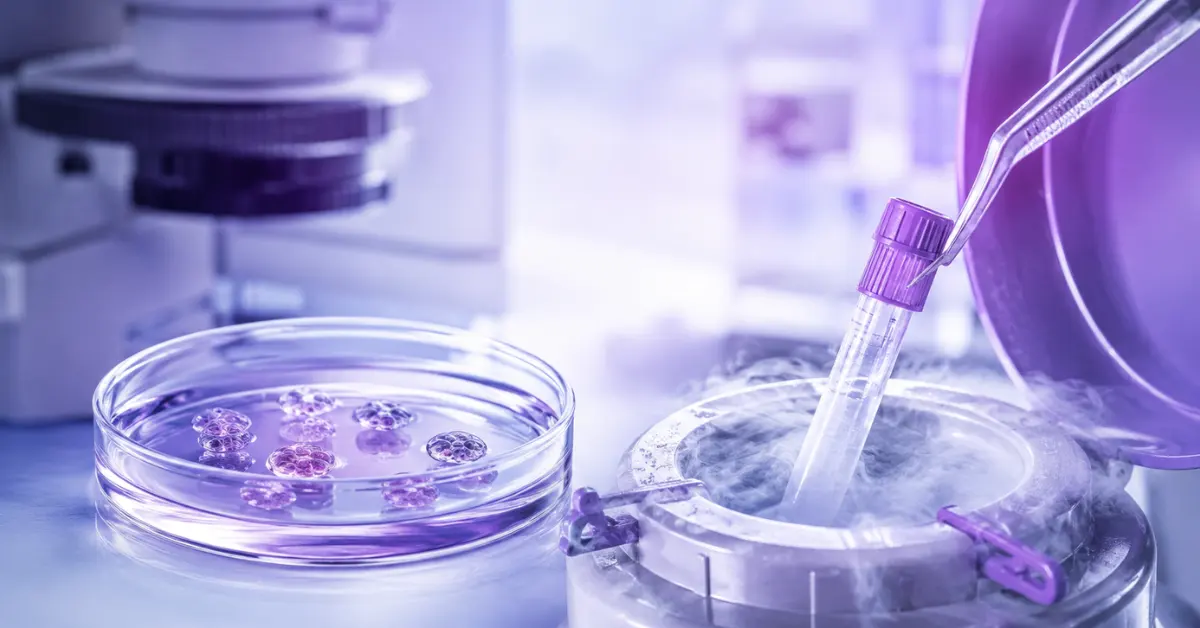
When couples go through IVF or any fertility treatment, one of the most important things they want to know is – what happens to the extra embryos? At THAAIMAI Hospital in Alwarpet, Chennai, we take that question very seriously. Embryo Freezing Treatment in Chennai has helped thousands of couples protect their future family planning without going through the entire IVF process again. This page will walk you through everything you need to know about embryo freezing – in simple, easy words.
Embryo freezing is a process where fertilised eggs (embryos) are stored safely at very low temperatures for future use. After an IVF cycle, if more embryos are created than needed, they are frozen and kept for later. This way, couples do not need to start a new IVF cycle if the first transfer does not work, or if they want another child later. At THAAIMAI Hospital, Alwarpet, we use the most reliable and modern method called vitrification to freeze and store embryos safely.
How Embryo Freezing Works
The process is straightforward. After fertilisation in the lab, the embryos are allowed to grow for a few days. Once they reach the right stage, they are treated with a protective solution and then rapidly frozen using a technique called vitrification. This converts all the water inside the embryo into a glass-like state, preventing any ice crystal damage. The frozen embryos are then stored in liquid nitrogen tanks at minus 196 degrees Celsius. When the couple is ready, the embryos are carefully thawed and transferred to the uterus.
Difference Between Embryo Freezing and Egg Freezing
Many people confuse embryo freezing with egg freezing. They are related but not the same. Egg freezing is when unfertilised eggs are frozen, usually for single women who want to preserve their fertility before marriage or medical treatment. Embryo freezing is when an egg has already been fertilised by sperm, and the resulting embryo is frozen. For married couples or those with a partner, embryo freezing generally has a better survival rate compared to egg freezing because fertilised embryos are more stable.
Medical Reasons for Embryo Freezing
There are several medical situations where freezing embryos is the right choice:
In all such cases, freezing the embryo allows the body to recover and prepare properly for a successful transfer.
Fertility Preservation for Future Pregnancy
Not every couple is ready to have a child right away. Some couples complete their IVF procedure but want to delay having a baby due to personal, career, or health reasons. Embryo freezing gives them the option to try for a pregnancy later without losing the embryos created during the current IVF cycle. This is especially useful for women in their early 30s who may want a second or third child in the future.
Extra Embryos from IVF Cycle
During a standard IVF cycle, the ovaries are stimulated to produce multiple eggs. After fertilisation, this often results in more embryos than can be transferred in one cycle. Transferring all of them at once increases the risk of multiple pregnancies. So, the best practice is to transfer one or two good embryos and freeze the remaining ones. These frozen embryos can be used in future frozen embryo transfer (FET) cycles, saving the couple from repeating the full IVF process.
Ovarian Stimulation
The process begins with ovarian stimulation. The woman is given hormonal injections for around 10 to 14 days to encourage the ovaries to produce multiple eggs in one cycle. During this time, the doctor monitors the growth of the eggs through regular ultrasounds and blood tests. The goal is to collect a good number of mature eggs safely. At THAAIMAI Hospital, our fertility team personalises the stimulation plan based on each patient's age, hormone levels, and ovarian reserve.
Egg Retrieval Process
Once the eggs are fully mature, a minor procedure called egg retrieval is performed. This is done under light sedation, so the patient does not feel any pain. Using a thin needle guided by an ultrasound, the doctor carefully collects the eggs from the ovarian follicles. The whole process takes about 20 to 30 minutes. The patient can usually go home the same day and resume light activities within a day or two.
Fertilization in IVF Laboratory
After retrieval, the eggs are taken to the IVF laboratory. Here, they are fertilised with the partner's or donor's sperm. This can be done either by conventional IVF (placing eggs and sperm together in a dish) or by ICSI (injecting a single sperm directly into the egg). ICSI is recommended when there are any concerns about sperm quality. Within 16 to 18 hours, the lab team checks whether fertilisation has been successful.
Embryo Development (Day 3 to Day 5)
After fertilisation, the embryos are allowed to develop in the laboratory incubator. At Day 3, they are called cleavage-stage embryos (6 to 8 cells). Most clinics today prefer to grow embryos up to Day 5, when they become blastocysts. A blastocyst has more cells, is more developed, and has a higher chance of implanting in the uterus successfully. The embryologist carefully monitors each embryo and selects the best ones for transfer or freezing.
Embryo Vitrification (Freezing Method)
Once the best embryos are identified, they are prepared for freezing. The vitrification method involves treating the embryo with a special solution called a cryoprotectant, which protects the cells from damage during freezing. Then the embryo is rapidly cooled to minus 196 degrees Celsius. This ultra-fast freezing method prevents ice crystals from forming inside the cells, which is the main cause of damage in older slow-freezing methods. The frozen embryos are then placed in sealed containers and stored in liquid nitrogen tanks.
Vitrification Method (Fast Freezing)
Vitrification is the current gold standard for embryo freezing worldwide. In this method, the embryo is cooled at an extremely fast rate – nearly 20,000 degrees Celsius per minute. This speed is so fast that the water molecules do not have time to form ice crystals. Instead, they become a glass-like solid state that protects the embryo perfectly. Studies show that vitrification has a survival rate of over 95% in most cases, making it far superior to the older method.
Slow Freezing Method (Traditional Approach)
Slow freezing was the original method used before vitrification was developed. In this approach, the embryo is cooled gradually over several hours using a controlled-rate freezing machine. While it was effective in its time, it had some limitations – mainly the risk of ice crystal formation, which could damage the embryo's cells. Today, most fertility hospitals including THAAIMAI Hospital have moved to vitrification as it gives much better results.
Which Method is Better?
Vitrification is clearly the better choice today. It has higher survival rates after thawing, better embryo quality post-thaw, faster procedure time, and lower risk of cell damage. That is why at THAAIMAI Hospital, Alwarpet, we exclusively use the vitrification method for all our embryo freezing cases. This ensures that each embryo stored with us has the best possible chance of a successful transfer later.
How Embryos are Stored Safely
Frozen embryos are stored in specially designed cryo-containers filled with liquid nitrogen at minus 196 degrees Celsius. Each embryo is labelled clearly with the couple's details and stored in individual straws or vials. The storage tanks are monitored around the clock for temperature stability. Modern cryo-storage systems also have backup alarms and automated monitoring to ensure no temperature fluctuation occurs. At THAAIMAI Hospital, we follow strict protocols to make sure every embryo is stored safely and remains identifiable.
How Long Embryos Can Be Stored
From a scientific standpoint, embryos stored at minus 196 degrees Celsius do not age. Research shows that embryos have been successfully used after being stored for 10 years or more. In India, the ICMR guidelines currently allow embryo storage for a defined period with consent renewals. Most clinics store embryos for up to 5 years with the option of renewal. Our team at THAAIMAI Hospital will inform you about storage duration policies and renewal procedures clearly before you begin.
Embryo Thawing Process
When the couple is ready to use their frozen embryo, the thawing process is carried out carefully in the laboratory. The embryo is slowly warmed from minus 196 degrees Celsius to room temperature. The cryoprotectant solution is gradually removed and replaced with normal culture media. The embryologist then checks the embryo under a microscope to assess its quality and viability. Most vitrified embryos survive this thawing process very well, with survival rates typically above 90%.
Preparing the Uterus for Embryo Transfer
Before the frozen embryo is transferred, the uterus needs to be prepared. The woman is given oestrogen tablets or patches for around 2 weeks to thicken the uterine lining. Once the lining reaches the right thickness (usually 8 mm or more), progesterone is added to prepare it for implantation. The doctor will monitor the lining through ultrasound scans and blood tests. When the timing is right, the embryo is thawed and transferred. This preparation phase is important and cannot be rushed.
Embryo Transfer Procedure
The embryo transfer is a simple and painless procedure. The woman lies on the examination table, and the doctor uses a thin, flexible catheter to gently place the embryo into the uterus. This is guided by an ultrasound to ensure accurate placement. The procedure takes only a few minutes and does not require any anaesthesia. After the transfer, the woman rests for a short time before going home. A pregnancy test is done 10 to 14 days after the transfer.
After Embryo Transfer Care
After the transfer, the following care is generally advised:
The two-week wait after a transfer can be emotionally challenging. Our care team at THAAIMAI Hospital is always available to support you during this time.
Embryo Damage During Freezing or Thawing
With modern vitrification methods, embryo damage during freezing or thawing has become very rare. However, there is still a small percentage of embryos that may not survive the thawing process. This usually depends on the embryo's initial quality at the time of freezing. Embryos that were graded as poor quality before freezing have a lower chance of surviving the thaw. This is why our embryologists at THAAIMAI Hospital carefully assess each embryo before deciding to freeze it.
Not All Embryos Survive the Process
It is important to have realistic expectations. Not all embryos that are frozen will survive the thawing process, and not all surviving embryos will result in a successful pregnancy. On average, about 90 to 95% of vitrified embryos survive thawing, but implantation depends on many other factors. Our team will always have an honest conversation with you about the expected outcomes based on your individual case.
Multiple Pregnancy Risk
If more than one embryo is transferred at a time, there is a risk of multiple pregnancy (twins or more). While twins may sound exciting, multiple pregnancies carry higher risks for both the mother and the babies – including premature birth, low birth weight, and complications during delivery. At THAAIMAI Hospital, we follow the practice of single embryo transfer (SET) whenever possible to minimise this risk while maintaining good success rates.
Cost of IVF and Embryo Freezing Procedure
The cost of embryo freezing treatment in Chennai varies depending on the number of embryos being frozen, the medications used during stimulation, the IVF cycle cost, and any additional tests required. At THAAIMAI Hospital in Alwarpet, we believe in transparent pricing. We provide a clear cost breakdown before the treatment begins so there are no surprises. Our team can also help you understand what is included in the package and what may be charged separately.
Storage Charges for Frozen Embryos
In addition to the procedure cost, there are annual storage charges for keeping the frozen embryos in the cryo-tank. These charges cover the cost of liquid nitrogen, storage equipment maintenance, monitoring, and regular quality checks. At THAAIMAI Hospital, our storage fees are reasonable and clearly communicated upfront. We also send periodic reminders for storage renewals so that you never accidentally lose your frozen embryos due to lapsed consent.
Insurance and Financing Options
Currently, most Indian health insurance policies do not cover fertility treatments including embryo freezing. However, this is slowly changing with some progressive insurance plans. We advise patients to check with their insurance provider about the extent of their fertility treatment coverage. At THAAIMAI Hospital, we try to make treatment as accessible as possible by offering flexible payment discussions. Please speak to our front desk team for guidance on payment planning options available at our facility.
Preserves Fertility for Future Use
One of the biggest advantages of embryo freezing is that it allows couples to preserve their fertility at the current stage of life. The embryos frozen today carry the quality of eggs and sperm from today. This is particularly important for couples who are going through IVF but are not yet ready to use all their embryos immediately. When the time is right, the frozen embryos are waiting – with the same quality they had when first created.
Higher Flexibility in Family Planning
Life is unpredictable. Job changes, health issues, family situations – any number of things can affect when the right time for a baby arrives. Embryo freezing gives couples the flexibility to plan their family on their own timeline without compromising on egg or embryo quality. Whether you want a second child five years from now, or you want to wait a couple of years before your first pregnancy, frozen embryos keep that option open for you.
Improves IVF Cycle Efficiency
Embryo freezing makes the whole IVF process more efficient. Instead of spending time and money on a new full IVF cycle every time a transfer fails or another pregnancy is desired, couples can use their already-frozen embryos. This significantly reduces the physical, emotional, and financial burden of repeated IVF cycles. It also means fewer hormone injections and fewer medical visits for the woman in future cycles.
Couples Undergoing IVF Treatment
If you are going through IVF and your cycle produces more embryos than needed for one transfer, embryo freezing is the most sensible option. It gives you backup embryos for future transfers without repeating the egg retrieval process. Embryo Freezing Treatment in Chennai at THAAIMAI Hospital is designed to support couples at every step of their IVF journey, including the safe preservation of extra embryos for future use.
Women Delaying Pregnancy
Women in their late 20s or early 30s who are not ready to start a family yet but want to protect their fertility should seriously consider embryo freezing. If they have a partner, embryo freezing gives better outcomes than egg freezing alone. This is especially relevant for women with a family history of early menopause, those with declining ovarian reserve, or those undergoing medical treatments that could affect fertility.
Cancer Patients Before Treatment
Cancer treatments such as chemotherapy and radiation can damage the ovaries and affect future fertility permanently. For women diagnosed with cancer who have a partner, embryo freezing before starting treatment is an important option to consider. It preserves the possibility of pregnancy after cancer treatment and recovery. Time is often a factor in these situations, and our team at THAAIMAI Hospital, Chennai, is experienced in handling fertility preservation on an urgent basis for cancer patients.
Embryo freezing is not just a medical procedure – it is a step towards giving yourself more choices in life. Whether you have extra embryos from an IVF cycle, want to delay pregnancy, or are facing a medical situation that threatens your fertility, embryo freezing keeps your options open. At THAAIMAI Hospital in Alwarpet, Chennai, our team is here to guide you with genuine care, clinical expertise, and a personalised approach. We do not believe in one-size-fits-all treatment. Every couple's journey is unique, and we walk alongside you at every step.
If you are looking for the best Embryo Freezing Hospital in Chennai with modern technology and a compassionate team, THAAIMAI Hospital is ready to help. Book a consultation with our fertility experts today and take the first step towards your family dream.
Yes. Modern vitrification technology has made embryo freezing extremely safe. More than 95% of vitrified embryos survive the thawing process without any damage. Thousands of healthy babies have been born from frozen embryos worldwide.
There is no strict limit. All good-quality embryos from an IVF cycle that are not used in the fresh transfer can be frozen. Typically, couples may freeze anywhere from 1 to 8 or more embryos, depending on how many were created and which ones are of good quality.
Yes. Scientifically, embryos do not deteriorate in storage. Research shows that embryos stored for over 10 years have been successfully used for pregnancy. The actual storage duration also depends on regulatory guidelines in your country and the consent renewal policy of your hospital.
If you decide not to use your frozen embryos, you have a few options – donating them to another couple, donating them for medical research, or allowing them to be disposed of. All decisions are made with your written consent and handled with full confidentiality at THAAIMAI Hospital.
The cost depends on factors like the number of embryos, medications, and whether it is part of an IVF cycle or a standalone freezing procedure. We recommend calling our team directly or visiting the hospital for a personalised cost discussion. We believe in transparent pricing and will explain every component clearly.
No. The frozen embryo transfer (FET) is a simple, outpatient procedure. It is similar to a cervical smear test in terms of discomfort – most women describe it as mild pressure. No anaesthesia is needed, and you can go home shortly after.
Take the first step toward better women’s health. Book an appointment with Thaaimai Hospital for expert care, accurate diagnosis, and advanced treatments designed for safe recovery and long-term wellness.